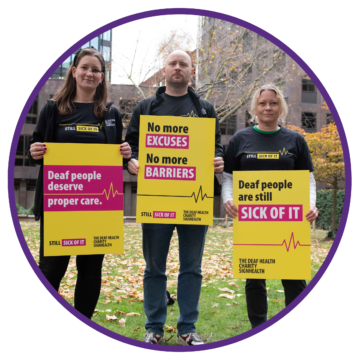
We are deeply concerned about the proposed closure of the secure women’s mental health service at St Andrew’s Hospital in Northampton. We are particularly concerned about the impact this could have on some of the most vulnerable members of the deaf community.
For many years, this service has provided highly specialist and culturally appropriate care for deaf women. Patients are supported by staff who can sign and by specialist professionals with experience of supporting deaf people with serious mental health problems.
Access to mental health care in BSL
Deaf people have the right to access mental health care in their own language. British Sign Language (BSL) is not simply a communication tool. It is a language and an important part of Deaf culture. Access to BSL is therefore essential for safe, effective and person-centred care.
Specialist deaf mental health services provide much more than access to interpreters in mainstream settings. They create environments where deaf people can communicate directly with staff and take part fully in therapy. They can also build supportive relationships with other deaf people and receive treatment from professionals who understand deaf culture and lived experience.
Deaf people need access to specialist BSL services at every stage of their mental health journey. This includes prevention, early intervention, crisis support, inpatient care, rehabilitation and recovery.
Gaps in mental health support
Our Shaping the Future of Deaf Mental Health report highlights significant inequalities in mental health care for deaf people.
The report found that deaf people do not receive equitable healthcare. Early intervention services are inconsistent, while specialist community mental health provision is not available consistently across England.
Deaf people can also struggle to access community mental health teams. As a result, support may be delayed and mental health can worsen. This can lead to inappropriate placements and make it more difficult for people to be discharged from inpatient care.
Poor deaf awareness and a lack of cultural understanding across the NHS can also lead to incorrect referrals and misdiagnosis.
Specialist services are already limited
There are already too few specialist BSL inpatient mental health services across the country.
Other services may not be suitable because of their location, limited specialist expertise or communication barriers. They may also be unable to support people with complex needs.
Deaf women should not have to accept care that fails to meet their linguistic, cultural and clinical needs simply because specialist options are becoming more limited.
Removing specialist inpatient services could create further gaps in care. It could also increase inequality and leave deaf people in settings that cannot fully meet their communication or cultural needs.
Specialist inpatient care must remain available
Organisations such as SignHealth play a vital role in supporting deaf people’s mental health. However, community support cannot replace specialist inpatient care when someone is experiencing a serious mental health crisis.
Our report highlights the need for accessible, specialist and holistic support throughout the whole mental health pathway. Deaf people must be able to access the right support, in the right environment and in their own language.
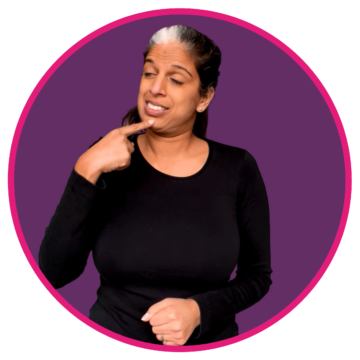
My name is Sammy, and I am deaf and autistic.
I spent eight years at St Andrew’s. Before I got there, I was struggling badly with my mental health and often felt alone and misunderstood. At St Andrew’s, I was finally able to communicate in my own language, build trust with staff and get the support I needed.
St Andrew’s saved my life.
That is why I am heartbroken that NHS England wants to close the specialist women’s service which met my needs as a deaf woman and meets other deaf women’s needs.
I worry about my friends who are there now. I worry about future deaf women who may need this support. And I worry about myself. If I ever become unwell again, I need to know there will be a specialist service that understands deaf people and BSL.
Deaf women deserve the same chance of recovery that I had.
Please don’t take that away.
This issue is not simply about preserving a service. It is about protecting the rights, dignity, safety and recovery of deaf people like Sammy who require mental health support.
We are calling on commissioners, healthcare providers and decision-makers to implement our Shaping the Futures’ recommendations and strengthen specialist deaf mental health services, ensuring deaf people can access the right support, in the right place, at the right time.