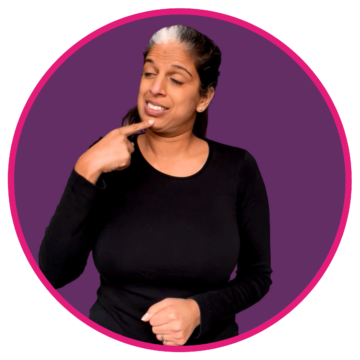
James Watson-O’Neill: This is my blog series where I talk about the work we are doing at SignHealth on equity, diversity and inclusion (EDI). I aim to talk about the things that I am trying to make progress with and to “sit in the mud” of how difficult this work can sometimes be.
Recent events
It feels important to talk about what is going on in the UK at the moment. The violence and the hatred towards people from the global majority, including Muslim people, is terrible. And I know that it is making many of my colleagues who are members of those communities feel unsafe.
And it prompts some difficult questions for us as leaders – what should we say and what words to use? We have spent time having those conversations in SignHealth. They are not easy conversations to have and they are often had over Teams and after working hours too. I am grateful to work with a group of colleagues who trust one another and that we can challenge each other too.
I see a lot of leaders – hundreds of them – giving advice on what to say and how to say it. It can be difficult to know whose advice to follow and some of the advice differs too.
I think a lot of my concern or hesitation is about the fear of getting it wrong but if I’ve learned anything in the past few years, is that it is important to DO and SAY things, not just think them. And of course, it is also about white fragility too. I have the luxury and power of worrying about getting it wrong, while so many of my friends and colleagues are faced with the fear of going outside.
Inclusive language
I am also conscious of focusing only on this very current violence. There is a risk of forgetting all of the other issues that are still affecting people, linked to racism. I have been learning over the past few weeks how some of the language we use when we talk about anti-racism can exclude people who experience racism. There is a risk that when we talk about people from the global majority or about black and brown people, that some people, particularly Jewish people or people from the Gypsy, Roma and Traveller communities, and others, can be excluded. Given how much antisemitism we have sadly seen recently, it feels more important than ever to be talking with inclusive language. I don’t have the perfect language to use but I’m going to keep trying.
Encouragement to take action
I am encouraged by the numbers of people who are taking part in rallies that demonstrate anti-racism principles. It is good to be reminded of how many people have positivity and love. And how relatively few hold hate in their hearts.
We all all need to think about how we follow up on our statements of support. We must make sure that we are actually DOING things to deliver on our commitments. Seeing all of the violence is a strong reminder of how much work there is still to do.
As always, if you have any comments or questions about what I’ve talked about here please do get in touch.
Email communications@signhealth.org.uk
-

Making Awareness Dates More Accessible for deaf People: A Simple Guide for Professionals
A few simple changes can make a big difference and help more people understand, engage with and benefit from your work.
-

Our response to the PHSO’s recent report
SignHealth welcomes a new Ombudsman report exposing the barriers deaf people still face. The evidence is clear: we’re still sick of it.
-

How Coercive Control Affects Deaf People
Coercive control is a pattern of behaviour used to dominate, isolate and control a partner. In deaf relationships, abuse can take forms that directly target communication and independence. One common tactic is withholding interpreters. An abusive partner may refuse to arrange an interpreter, discourage a deaf person from requesting one, or insist on speaking on…
-

Domestic Abuse and Sexual Violence in the deaf Community: Breaking Down Barriers
Domestic abuse and sexual violence can affect anyone, including deaf people. However, deaf survivors often face additional challenges when trying to access help and support. Communication barriers can make it harder to report abuse, contact emergency services, or access specialist support. In some cases, abusers exploit these barriers by controlling access to interpreters, communication devices,…
-

Professionals Missing the Signs: Improving Responses to Deaf Victims of Domestic Abuse
Domestic abuse and sexual violence can affect anyone, but deaf victims often face additional barriers when seeking help.
-

Early Release Scheme 2026: What it means for deaf people
Early Release Scheme 2026: What it means for deaf people – deaf people should have equal access to information and support, whether they are a victim or an offender.