Exclusion of deaf and deafblind British Sign Language users from health and social care in the UK.
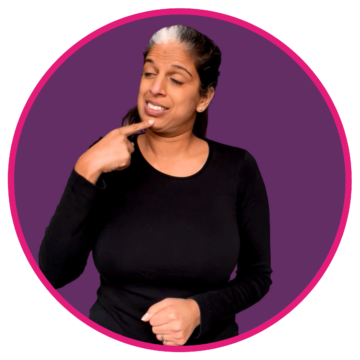
Dr Sarah Powell shares her view on the recent report launch from the BSL Advisory Board:
This issue has impacted me both personally and professionally.
I fully empathies with the barriers to getting an interpreter for appointments. It is not a simple matter of just having an interpreter arranged.
I have often felt anxious during doctor or hospital appointments, wondering whether an interpreter would be present or not. This uncertainty has led to feelings of relief when one was available—or frustration when one was not.
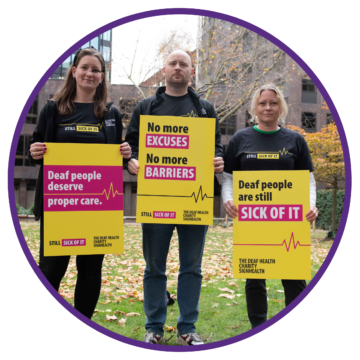
Due to my health condition, I frequently attend medical appointments, and sadly, many have been stressful because no interpreter was provided. It is awful when this happens. Enough is enough—this needs to stop. (Check out SignHealth’s campaign Still Sick Of It).
I would love to see an automatic right to ensure an interpreter is present for every medical appointment. The report highlights horrific stories of misdiagnosis and late diagnoses leading to amputations or even death.
Sadly, I am not surprised by these findings, but reading the report was still deeply emotional for me. Professionally, I have worked for SignHealth for over 10 years, and I truly love my work, which focuses on primary care mental health for deaf BSL users.
I often see barriers preventing people from accessing GP appointments, linked to mental health issues such as depression and anxiety—often because no interpreter is provided.
This has a negative impact on their mental health, which is sadly understandable. In our work, we do not use interpreters; we provide therapy directly, one-to-one, in BSL.
I am so proud of what we do—improving the lives of deaf people for the better.
We consistently rank in the top 10 best-performing Talking Therapies services in England (out of around 130). This demonstrates the value of our work, especially considering the cultural and linguistic adaptations we make to meet our clients’ needs.
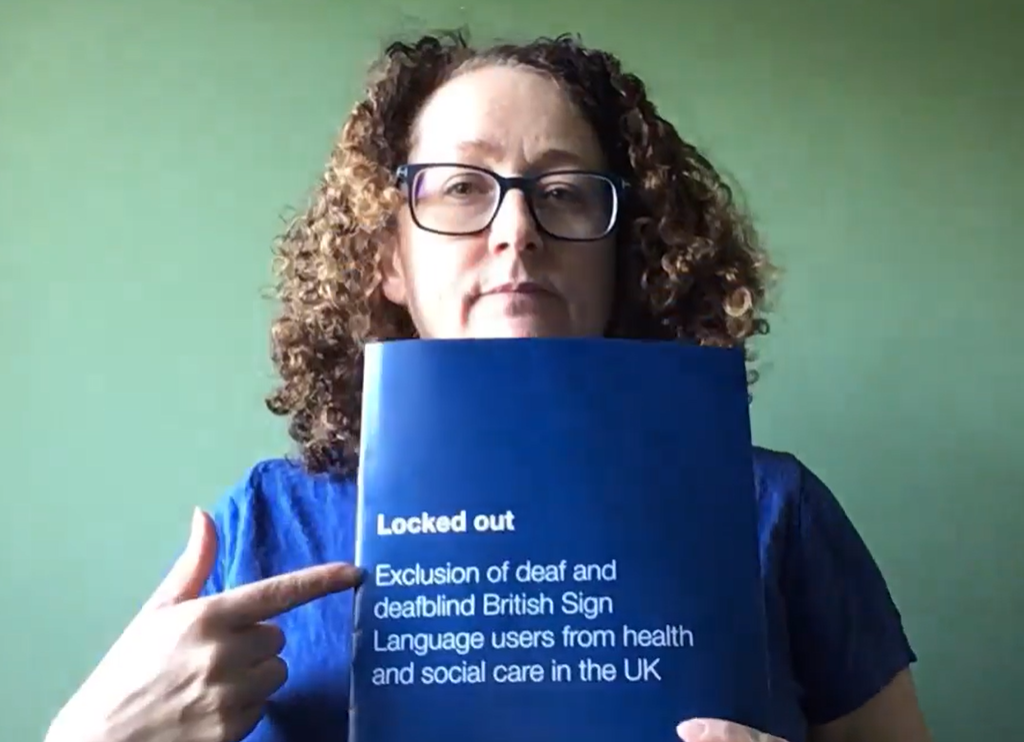
The report highlights the importance of interpreter provision. However, when deaf people access mainstream services, they face uncertainty about whether an interpreter will be present.
The report states that 80% of appointments did not have an interpreter turn up—imagine the impact that has on a deaf person. This is one reason why our work is so well-suited for deaf people.
What you can do to help: Please read the report to understand the issues deaf and deafblind BSL users face, and write to your MP.
It’s time to stop these barriers—time to work together to improve the lives of deaf people. Time to ensure that this “simple issue” is no longer happening. Thank you.
Support us and take action – Write to your MP.
What’s Happening

Resource Healthy Minds for deaf children training
Book on to one of our upcoming online workshops for professionals who work with deaf children and young people.

Social Care Embedding Equality in Social Care
Embedding Equality in Social Care: Delivering the Prevention and Independence that Reform Demands

Resource Access therapy in BSL
At SignHealth, we provide specialist NHS Talking Therapies in British Sign Language (BSL) for deaf people in partnership with NHS Integrated Care Boards (ICBs).

Workshops Training and workshops from the Domestic Abuse Service
Join one of our free online workshops for the deaf community or for professionals working with deaf people.